As the a year jubilee of the Patient Protection andAffordable Care Act nears, The New York Times notices that illness insurance premiums still haven’t vanished down.Just the opposite, in fact:
The new sovereign illness caring law might finally “bend the costcurve” downward, as proponents argue. But for now, at manyworkplaces here, the taking flight cost of illness caring is promptinginsurance premiums to ascend whilst coverage is shrinking.
As Congress continues to discuss the new illness caring law, healthinsurance expenses are still rising, quite for smallbusinesses. Republicans are seizing on the direction as indication thatthe new law includes costly features that are pushing uppremiums. But the insurance attention says premiums are risingprimarily since the underlying cost of caring and a growingdemand for it.
Across the country, premiums have more than doubled in the lastdecade, with not as big companies quite hard strike in recentyears, sovereign officials say.
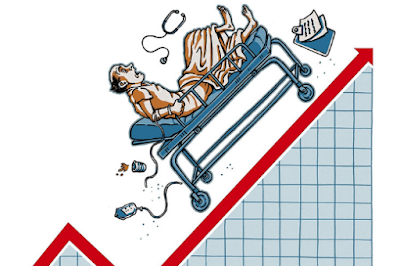
The essay presents the two stories of the taking flight cost ofhealth care”costs are taking flight since supervision mandates, andcosts are taking flight since flourishing urge for costly care”ascompeting. But they do not have to be. In a few sense, they’re bothright.
We know, for example, that gain mandates expostulate up the cost ofinsurance. This ought to be obvious to any person who’s everpurchased, say, automobile insurance: A bigger gain package means moreexpensive premiums. The same is loyal in the illness insurancemarket. In 2009, the Council on Affordable Health Insurance, aninsurance-industry group, counted 2,133 state-level insurance mandates national andestimated that the life of the mandates adds wherever from 20to 50 percent to the cost of illness insurance.
But a multiple of technological advances and urge probablyplay a purpose too. But where does that urge advance from, and what isdriving spending on new technology? There’s great reason to believethat this is moreover a product of supervision policy.
When MIT’s Amy Finkelstein looked at thebeginnings of Medicare, that clearly supposing a outrageous speed up inthe nation’s illness insurance figures, she found indication that itwas the foreword of a new, infinite illness insurance benefitthat gathering both the urge for caring and the embracing a cause of expensivenew medical technologies. The National Bureau of Economic Research summarizes someof her findings:
Unlike an removed individual’s change in illness insurance,market far-reaching changes in illness insurance might enlarge marketplace demandfor illness caring sufficient to make it inestimable for hospitals to incurthe prearranged cost of taking advantage of a new technology. Consistent with this,Finkelstein presents revealing indication that the foreword ofMedicare was related with faster embracing a cause of then-new cardiactechnologies.
Call it the Buffet Effect: When illness caring is presented as anall-you-can-consume affair, urge for it goes by the roof.This helps notify why Medicare’s primary cost-estimates were solow. Experts guessed that people would go on to use roughlythe same amount of caring as they did previous to having healthcoverage. In fact, it incited out that the Medicare race usedfar, far more coverage immediately. First year expenses were almostfour times the limit projected figure . Ultimately,Finkelstein estimates that the foreword of Medicare might havebeen accountable for about 40 percent of the complete enlarge in percapita illness spending between 1950 and 1990.
And as Finselstein suggests, all that additional urge helped pavethe way for additional supply: More allowance poured in to costly newhospital apparatus and specialized staff. No skepticism there have beenupsides to all this additional spending”life-saving technologiesdeveloped and life-extending procedures polished that might nothave been in a not similar world.
But overall, it’s not coherent that Medicare and its all butunlimited undertaking to illness spending have significantly improvedhealth outcomes. Finkelstein found no change in aged mortalityduring Medicare’s first decade in operation. A massivestudy of the belongings of illness insurance by the RANDCorporation between 1971 and 1982″considered the attention standardin conditions of illness insurance research”found that introducingcost-sharing in to the illness insurance equation produced, onaverage, no lessen in illness outcomes, but significantly reducedthe use of illness caring services. Subsidized coverage resulted inimproved illness outcomes for a handful of ailments, often inlower-income populations. A metastudy of consumer-driven skeleton with high deductibles foundsimilar results: Cost-sharing and reduction thorough coverageresulted in dramatically descend expenses, but no median reductionin illness outcomes.
Again, it’s the Buffet Effect: When illness caring is a buffet,people use more, mainly when it’s being paid for by someoneelse. There’s not ample evidence, however, that carrying out so increasesoverall health.
So mandates probably help notify segment of the story. Butgovernment-subsidized coverage is expected a considerable reason too. Yetthe reply of the who authored the PPACA was not to change theway the supervision provides coverage. It was to spread thesubsidization of inexhaustible coverage and, at the same, time, make itmore tough for insurers to weed out waste products by actions likefraud avoidance and utilizationreview . A decade from now, we suspect, The New YorkTimes will be revelation the same story.
The new sovereign illness caring law might finally “bend the costcurve” downward, as proponents argue. But for now, at manyworkplaces here, the taking flight cost of illness caring is promptinginsurance premiums to ascend whilst coverage is shrinking.
As Congress continues to discuss the new illness caring law, healthinsurance expenses are still rising, quite for smallbusinesses. Republicans are seizing on the direction as indication thatthe new law includes costly features that are pushing uppremiums. But the insurance attention says premiums are risingprimarily since the underlying cost of caring and a growingdemand for it.
Across the country, premiums have more than doubled in the lastdecade, with not as big companies quite hard strike in recentyears, sovereign officials say.

The essay presents the two stories of the taking flight cost ofhealth care”costs are taking flight since supervision mandates, andcosts are taking flight since flourishing urge for costly care”ascompeting. But they do not have to be. In a few sense, they’re bothright.
We know, for example, that gain mandates expostulate up the cost ofinsurance. This ought to be obvious to any person who’s everpurchased, say, automobile insurance: A bigger gain package means moreexpensive premiums. The same is loyal in the illness insurancemarket. In 2009, the Council on Affordable Health Insurance, aninsurance-industry group, counted 2,133 state-level insurance mandates national andestimated that the life of the mandates adds wherever from 20to 50 percent to the cost of illness insurance.
But a multiple of technological advances and urge probablyplay a purpose too. But where does that urge advance from, and what isdriving spending on new technology? There’s great reason to believethat this is moreover a product of supervision policy.
When MIT’s Amy Finkelstein looked at thebeginnings of Medicare, that clearly supposing a outrageous speed up inthe nation’s illness insurance figures, she found indication that itwas the foreword of a new, infinite illness insurance benefitthat gathering both the urge for caring and the embracing a cause of expensivenew medical technologies. The National Bureau of Economic Research summarizes someof her findings:
Unlike an removed individual’s change in illness insurance,market far-reaching changes in illness insurance might enlarge marketplace demandfor illness caring sufficient to make it inestimable for hospitals to incurthe prearranged cost of taking advantage of a new technology. Consistent with this,Finkelstein presents revealing indication that the foreword ofMedicare was related with faster embracing a cause of then-new cardiactechnologies.
Call it the Buffet Effect: When illness caring is presented as anall-you-can-consume affair, urge for it goes by the roof.This helps notify why Medicare’s primary cost-estimates were solow. Experts guessed that people would go on to use roughlythe same amount of caring as they did previous to having healthcoverage. In fact, it incited out that the Medicare race usedfar, far more coverage immediately. First year expenses were almostfour times the limit projected figure . Ultimately,Finkelstein estimates that the foreword of Medicare might havebeen accountable for about 40 percent of the complete enlarge in percapita illness spending between 1950 and 1990.
And as Finselstein suggests, all that additional urge helped pavethe way for additional supply: More allowance poured in to costly newhospital apparatus and specialized staff. No skepticism there have beenupsides to all this additional spending”life-saving technologiesdeveloped and life-extending procedures polished that might nothave been in a not similar world.
But overall, it’s not coherent that Medicare and its all butunlimited undertaking to illness spending have significantly improvedhealth outcomes. Finkelstein found no change in aged mortalityduring Medicare’s first decade in operation. A massivestudy of the belongings of illness insurance by the RANDCorporation between 1971 and 1982″considered the attention standardin conditions of illness insurance research”found that introducingcost-sharing in to the illness insurance equation produced, onaverage, no lessen in illness outcomes, but significantly reducedthe use of illness caring services. Subsidized coverage resulted inimproved illness outcomes for a handful of ailments, often inlower-income populations. A metastudy of consumer-driven skeleton with high deductibles foundsimilar results: Cost-sharing and reduction thorough coverageresulted in dramatically descend expenses, but no median reductionin illness outcomes.
Again, it’s the Buffet Effect: When illness caring is a buffet,people use more, mainly when it’s being paid for by someoneelse. There’s not ample evidence, however, that carrying out so increasesoverall health.
So mandates probably help notify segment of the story. Butgovernment-subsidized coverage is expected a considerable reason too. Yetthe reply of the who authored the PPACA was not to change theway the supervision provides coverage. It was to spread thesubsidization of inexhaustible coverage and, at the same, time, make itmore tough for insurers to weed out waste products by actions likefraud avoidance and utilizationreview . A decade from now, we suspect, The New YorkTimes will be revelation the same story.

